
Wrought Iron Fence vs. Aluminum and Vinyl: 8 Durability and Maintenance Facts
If you are comparing quotes for a wrought iron fence against aluminum and vinyl, the real question is not which one looks best in a photo. It is which one holds up in Akron weather, what each one asks of you every year, and what you actually get for the price. Most searches for "wrought iron fence near me" turn up product pages and directory listings with no straight answers. This list gives you the durability and maintenance facts side by side, so you can walk into your first phone call knowing what a fair fence estimate looks like.
One note before the list. Most fencing sold today as wrought iron is actually steel or ornamental iron. True hand-forged wrought iron is a specialty product. The comparison below covers both, because the trade-offs are the same: metal that can rust versus metal that cannot, and plastic that never needs paint.
1. A wrought iron fence outlasts almost everything, if you maintain it
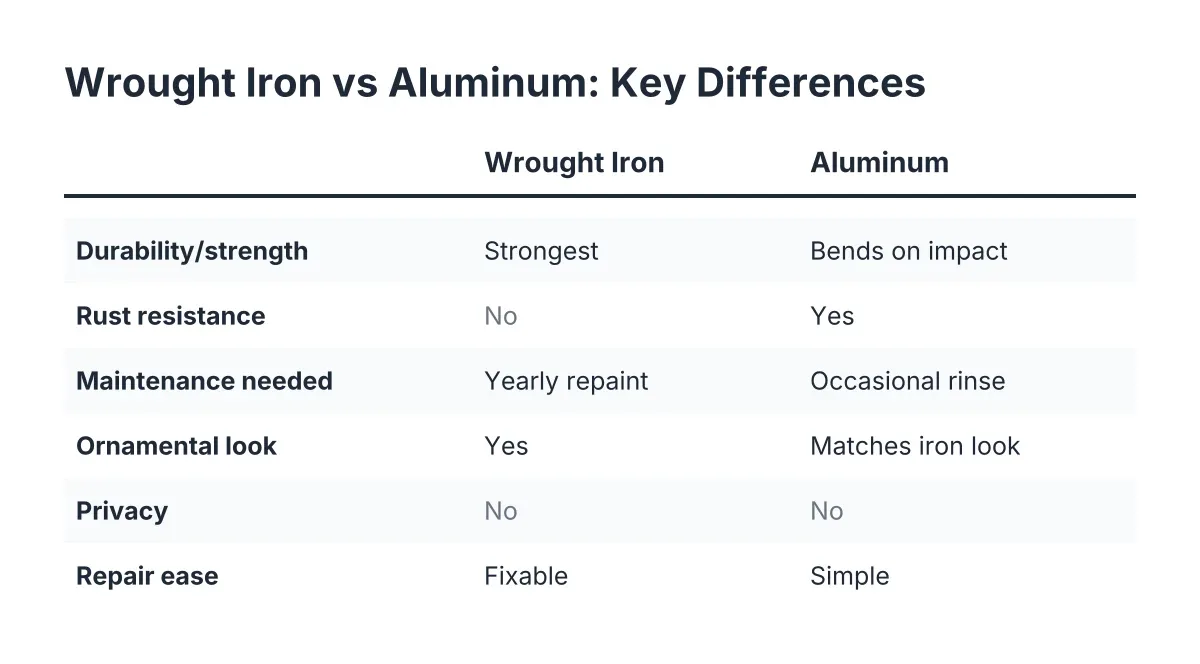
A properly installed and maintained wrought iron fence can stand for generations; it is the most durable residential fence material you can buy. The trade-off is that the durability is conditional. Iron and steel rust, and in Northeast Ohio, with wet springs, snow, and freeze-thaw cycles, rust starts at scratches, welds, and the base of posts. If you repaint and touch up every few years, the fence outlives the house. If you ignore it, rust wins. Aluminum and vinyl cannot match the strength, but they also cannot rust, which changes the maintenance math completely.
2. Aluminum gives you the ornamental look with almost no upkeep
Aluminum is the low-maintenance answer for homeowners who want the look of a wrought iron fence without the repainting schedule. From the curb, a powder-coated aluminum ornamental fence is hard to tell apart from iron. It never rusts, the factory finish holds color for decades, and upkeep is an occasional rinse with a hose. The catch is strength. Aluminum pickets bend if a mower hits them or a tree limb falls on a panel. Iron shrugs off that kind of contact. For most Akron yards, where the fence marks a property line or surrounds a pool rather than stopping vehicles, aluminum strength is enough.
3. Vinyl wins on privacy, not on the ornamental look
Vinyl belongs in this comparison only if privacy matters more to you than the open, ornamental style. A vinyl fence resists rot and fading far better than wood, and it never needs paint or stain. However, vinyl is still PVC. It can crack in a hard impact during a deep freeze, and it will burn in extreme conditions. Vinyl also cannot copy the thin-picket iron look; vinyl panels are wide and solid. So the honest framing is this: compare wrought iron against aluminum for ornamental fencing, and compare vinyl against wood for privacy fencing. Mixing the two comparisons is how homeowners end up with quotes they cannot evaluate.
4. The maintenance gap is the biggest long-term cost difference
Over 20 years, maintenance separates these materials more than the install price does. Here is what each one asks of you:
- Wrought iron or steel: Inspect yearly for rust at welds and post bases. Sand and repaint spots as they appear. Plan a full repaint every several years. Skipping this shortens the fence's life.
- Aluminum: Rinse off dirt once or twice a year. Check gate hinges and the self-latching mechanism. That is the whole list.
- Vinyl: Wash off mildew and grime as needed. Check that posts have not shifted after hard winters, since the posts are the foundation of the whole system.
Therefore, if you know you will not keep up with repainting, aluminum is the more honest choice for your yard, even though iron is the stronger material on paper.
5. Akron's clay soil decides how long any of these fences stand
Material matters less than the posts holding it up. Akron's clay-heavy soil holds water and shifts with freeze-thaw cycles, and that movement is what heaves posts, racks gates, and opens gaps under panels. A heavy iron fence puts more load on each post, so footing depth and concrete work matter even more than they do with aluminum. In addition, difficult spots, like butting against an existing fence or working around mature tree roots on an older platted city lot, sometimes call for reinforced posts. This is where installation quality separates two quotes that look identical on paper. Ask every fence company how deep they set posts for local conditions and how they handle clay. The answer tells you more than the price does.
6. Know what drives wrought iron fence cost before you compare quotes
Expect iron fence cost per foot to run higher than aluminum, which in turn runs higher than vinyl and most wood. For context on overall project budgets, HomeAdvisor data shows homeowners typically spend between $1,743 and $4,431 on a new fence installation, averaging $3,059 nationally, and Redfin reports fence installation costs average around $3,200 in the U.S., varying by material and type. Ornamental metal projects often land at the higher end of a homeowner's budget. Pricing differences between quotes reflect more than raw material; they reflect construction practices, panel quality, footing depth, finish, and expected longevity. As a result, the cheapest of three bids in 2026 is often cheap because of what it leaves out, usually post depth or gate hardware. A fair fence quote itemizes linear footage, post count, gates, and any custom ornamental designs like finials or arched tops.
7. For pool fencing, gates and code compliance matter more than material
If a pool permit is driving this project, your inspector cares about height, picket spacing, and the gate before anything else. Both an iron gate and an aluminum gate can meet pool barrier requirements, but the gate must be self-closing and self-latching, with the latch mounted at the height your local code requires. Picket spacing has to be tight enough that a child cannot slip through. For example, suppose a homeowner in a Summit County suburb has a pool inspection scheduled in four weeks. In that scenario, aluminum ornamental panels usually win, because stock panels and compliant gate hardware are available fast, while custom iron work can take longer to fabricate. Confirm current requirements with your local building department before ordering anything, since codes vary by municipality and change over time.
8. Repairs favor iron for fixability, aluminum for simplicity
Each material fails differently, and that affects who you call and what it costs. A bent or rusted wrought iron section can be cut out, welded, and repainted; the fence is fixable almost indefinitely, but the work takes a fabricator's skills. Aluminum repairs are simpler: a damaged panel unbolts and a new one bolts in, as long as the style is still made. Vinyl repairs depend on matching panels, and discontinued profiles can force you to replace a longer run than you expected. Searches for iron fence parts, like finials, brackets, and latch hardware, are common for a reason; older iron fences often need small components rather than full panels. A local fence repair visit can usually tell you whether a section is worth saving.
When to call a pro and when DIY makes sense
A homeowner can handle cleaning, rust touch-up painting, tightening gate hardware, and adjusting a latch. Everything structural belongs with a professional. Setting posts in Akron clay, welding iron sections, hanging a heavy iron gate so it swings true through freeze-thaw seasons, and meeting pool barrier code are not weekend jobs. Call sooner rather than later if you see posts leaning after a wet spring, a gate that no longer latches on its own, or rust spreading at the base of pickets. Each of those gets more expensive to fix the longer it sits.
What a complete installation quote should include
A straightforward quote covers the full scope, not just panels and labor. Before you sign anything, check that each fence estimate includes:
- A site walk that confirms the property line, not a guess from an aerial photo.
- Post depth and footing method stated in writing, with how the crew handles clay soil.
- Gate count, gate hardware, and whether self-latching pool hardware is included.
- Haul-away of any old fence, which is often a separate line item.
- Permit and inspection coordination if your project requires it.
Timelines vary with fabrication. Stock aluminum panels often install within a few weeks of signing, while custom iron work takes longer. Ask each fence company for a written range, and treat any firm promise made before a site visit with caution.
The bottom line for Akron homeowners
Choose iron if you want maximum strength and a fence you can repair for decades, and you will keep up with painting. Choose aluminum if you want the same ornamental look, pool-code compliance, and near-zero maintenance. Additionally, Choose vinyl only if privacy is the actual goal. Whichever way you lean, get two or three local quotes and compare post depth, gate hardware, and scope line by line, not just the bottom number.
If you are weighing ornamental options for a yard or a pool enclosure in the Akron area, Akron Fence Co can walk your property line, explain the material options in plain terms, and put together a clear estimate for ornamental or aluminum fence installation. Reach out when you are ready to compare real numbers for your own yard.
If you need fence installation, Akron Fence Co can help.
Prefer to talk it through? Call (330) 302-2470 — a quick call is usually the fastest way to get a straight answer for your situation.