
Wrought Iron Fence Maintenance: Cleaning, Rust Prevention, and Seasonal Care
A wrought iron fence can outlast almost everything else in your yard, but only if you stay ahead of rust. Good wrought iron fence maintenance for rust prevention is not complicated. It comes down to a simple routine: wash the fence, find rust early, treat it before it spreads, and repaint bare metal before Akron's freeze-thaw winters get to it. This step-by-step guide walks through that routine so you can keep an ornamental fence looking sharp for decades instead of fighting corrosion every spring.
This matters in Northeast Ohio more than in dry climates. Road salt spray, wet clay soil at the base of posts, and months of snow sitting against the bottom rail all speed up rust. Follow these steps once or twice a year and you will catch problems while they are still a wire brush job, not a welding job.
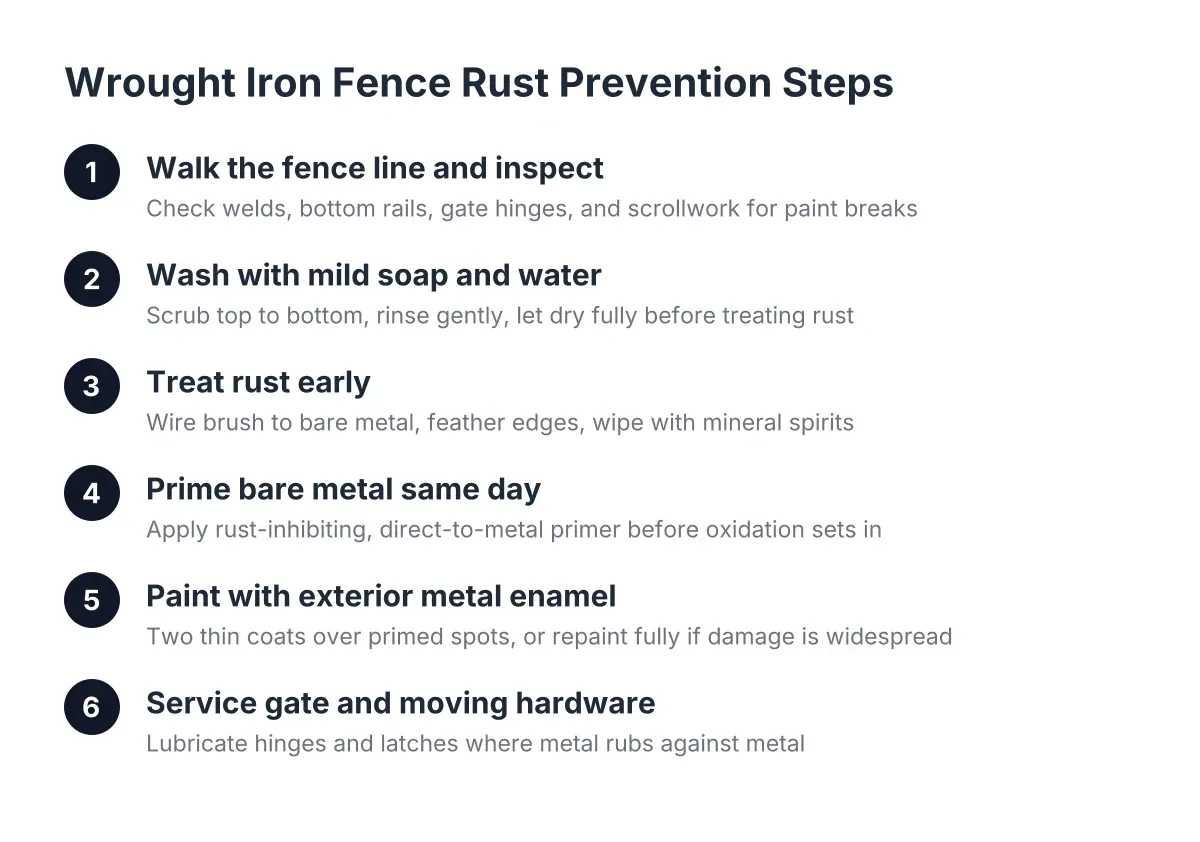
Step 1: Walk the Fence Line and Inspect Every Section
Start with a slow walk along the full fence line, both sides if you can reach them. You are looking for anything that breaks the paint film, because paint is the only thing standing between iron and rust.
Check these spots first, since they fail before anything else:
- Welds and joints where pickets meet the rails
- The bottom rail and the base of each post, where snow and wet leaves sit
- Gate hinges, latches, and anywhere metal rubs against metal
- Decorative scrollwork and finials, which trap water in their crevices
- Any spot where a trimmer, mower, or kids' bikes have chipped the paint
Mark problem areas with painter's tape or chalk so you do not lose track of them. Also push gently on each post. A post that moves in Akron's clay soil may have a footing problem from frost heave, and no amount of paint fixes that. If a post rocks or the fence leans, that section needs fence repair, not just touch-up.
Suppose a storm just dropped a branch on two sections of your fence. In that scenario, do this same walk before anything else. Bent pickets and cracked welds are often repairable section by section; you rarely need to replace the whole run. Separate what is cosmetic from what is structural, then photograph everything for your insurance conversation.
Step 2: Wash the Fence With Mild Soap and Water
Next, clean the entire fence. Dirt and grime hold moisture against the metal, and moisture is what feeds rust. Cleaning also exposes small rust spots you missed on the walk-through.
Mix a few squirts of dish soap into a bucket of warm water. Scrub the fence with a soft brush or sponge, working top to bottom one section at a time. For scrollwork and tight corners, an old toothbrush or bottle brush gets into the crevices where water hides.
Rinse with a garden hose on a normal spray setting. Skip the pressure washer, or keep it on its lowest setting from several feet back. High pressure strips paint from weak spots and drives water into joints, which creates the exact problem you are trying to prevent. Let the fence dry fully before the next step. A warm, dry day with low humidity is ideal.
Step 3: Iron Fence Rust Prevention Through Early Treatment
Rust never stays small on its own. Once it starts under the paint, it creeps outward and lifts the surrounding paint with it. Therefore, every rust spot you found gets treated now, while it is still surface rust.
Work through each marked spot:
- Scrub the rust with a wire brush until you reach solid metal. For stubborn spots, use medium-grit sandpaper or a wire wheel on a drill.
- Feather the edges of the surrounding paint with fine sandpaper so the repair blends in.
- Wipe the area with a rag dampened in mineral spirits to remove dust and oil.
- For deep pitting you cannot sand out, apply a rust converter. It chemically turns remaining rust into a stable, paintable surface.
Be honest about what you find. Surface rust and light pitting are homeowner jobs. However, if a picket has rusted through, a weld has cracked, or the bottom rail flexes when you press on it, that is a structural repair. A fence company with ornamental fence experience can replace or re-weld individual parts, which usually costs far less than replacing the section.
Step 4: Prime Bare Metal the Same Day
Bare iron starts oxidizing within hours in humid air. As a result, every spot you sanded to bare metal needs primer the same day you expose it.
Use a rust-inhibiting primer made for metal; the label will say direct-to-metal or rust-preventive. Brush it on every sanded spot and slightly over the edges of the old paint. For a fence with many small repairs, a small sash brush gives you more control than spray cans, and you waste less primer in the wind.
Give the primer the full dry time on the can before painting. Rushing this step is the most common reason touch-up paint peels the following spring.
Step 5: Paint With Exterior Metal Enamel
Now repaint. For spot repairs, two thin coats of exterior oil-based or direct-to-metal enamel over the primed areas will seal the fence back up. Thin coats bond better than one heavy coat, which sags and traps solvents.
If more than about a quarter of the fence shows chips, fading, or chalky paint, repaint the whole fence instead of chasing spots. A full repaint every several years is normal for iron in a freeze-thaw climate, and it resets the clock on the entire finish. Black is traditional for a wrought iron fence, but dark bronze and deep green also hide dust and pollen well between washes.
Paint on a dry day above fifty degrees, and avoid painting in direct afternoon sun, which skins the paint before it levels. Keep a small jar of matching enamel in the garage afterward. A thirty-second dab on a fresh trimmer chip in July saves you a sanding session in October.
Step 6: Service the Gate and Moving Hardware
Gates take more abuse than any fixed section because they move, slam, and carry their own weight on two hinges. Iron fence rust prevention extends to gate maintenance, which is its own short checklist:
- Oil hinges and the latch with a silicone or lithium-based lubricant twice a year
- Tighten hinge bolts and check that the gate swings without dragging
- Look for rust where the hinge barrel traps water, and treat it like any other rust spot
- Confirm the latch still catches firmly; a gate that bounces open defeats the point of a pet or pool fence
A sagging gate usually means a loose hinge or a shifting post, not a ruined gate. Adjust and tighten first. If the gate post itself has heaved out of plumb, that is a footing issue below ground and worth a professional look, especially on Akron's clay lots where frost moves shallow footings.
Step 7: Set a Seasonal Wrought Iron Fence Maintenance Schedule
Finally, put the routine on a calendar so it actually happens. Iron rewards consistency more than intensity. A realistic Akron schedule looks like this:
- Spring: Full inspection and wash after the last freeze. Treat winter rust, touch up paint, and rinse off road salt residue near driveways and sidewalks.
- Summer: Quick monthly glance for trimmer chips and sprinkler overspray. Keep sprinkler heads aimed away from the fence; daily wetting is a rust factory.
- Fall: Rake leaves away from the bottom rail, trim back vines and shrubs touching the metal, and lubricate gate hardware before the cold.
- Winter: Keep snow from being piled against the fence when you shovel or snow-blow, and avoid tossing salted slush onto the bottom rail.
That is the whole program: two real work sessions a year plus quick checks. Compared to staining a wood fence or replacing rotted pickets, this level of wrought iron fence maintenance is light, which is part of why iron and ornamental styles appeal to new homeowners fencing a perimeter for the first time.
When Maintenance Becomes Repair or Replacement
Know the line between upkeep and repair. Call a fence repair pro when you see rusted-through pickets, cracked welds, leaning posts, or storm damage that bent sections out of line. Those jobs involve cutting, welding, or resetting posts below the frost line, and a bad DIY fix often costs more to undo later.
For context on budget, HomeAdvisor data shows homeowners typically spend between $1,743 and $4,431 on a new fence installation, averaging $3,059 nationally. Ornamental iron sits at the higher end of material options, which is exactly why the maintenance habit above pays off. A fence you clean and paint on schedule can serve the property for generations; one you ignore becomes a section-by-section replacement project.
If you are weighing iron against aluminum or vinyl for a new perimeter, factor this routine into the decision. Iron asks for a weekend or two a year. In exchange, you get a fence with weight, security, and a look that aluminum imitates but does not match.
If you need fence installation, Akron Fence Co can help.
Prefer to talk it through? Call (330) 302-2470 — a quick call is usually the fastest way to get a straight answer for your situation.