
Installing Vinyl Fence Without Concrete in Akron: Will the Posts Hold?
Installing vinyl fence without concrete sounds appealing. No bags to mix, no cure time, no mess along your property line. Driven-post and no-dig systems get a lot of attention online, and some of them work well in the right soil. The problem is that Akron is not the right soil for most of them. Our clay-heavy ground holds water, swells, and shoves posts around every winter. This guide walks through how no-concrete vinyl fence installation actually works, where it fails in Akron's ground, and what to do instead so your new fence stays straight for decades.
If you are replacing a weathered fence that leaned, heaved, or rotted out, the method you pick for the posts matters more than anything else about the project. Posts are the foundation of a vinyl fence. The panels only stay straight if the posts do.
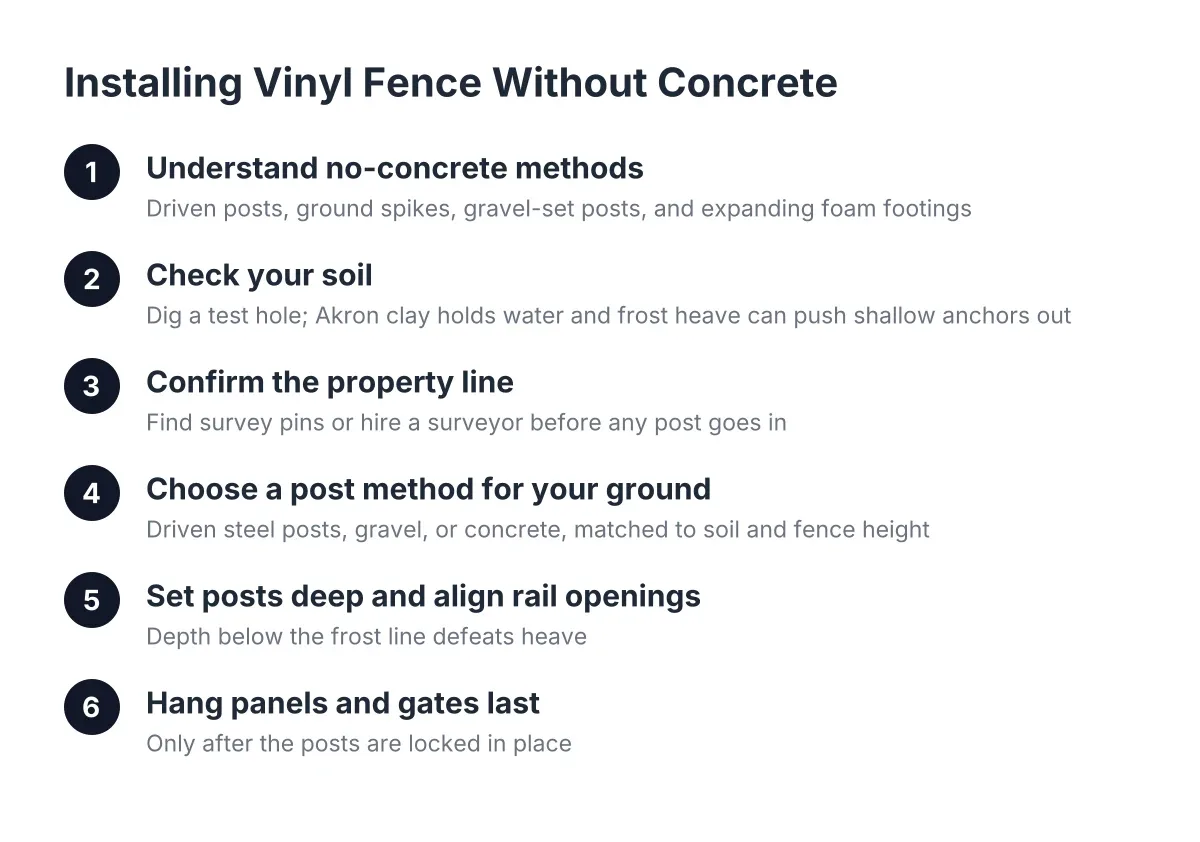
Step 1: Understand How Installing Vinyl Fence Without Concrete Works
Before you choose a method, know what the options actually are. "No concrete" covers a few different systems, and they behave differently in the ground.
- Driven steel posts. A steel pipe or anchor gets driven several feet into the soil with a post driver. The vinyl post then sleeves over the steel. The soil itself grips the pipe.
- Ground spikes and no-dig anchors. A pointed metal spike is pounded in, and the post sets into a bracket on top. These are common with lighter picket fence kits.
- Gravel-set posts. You still dig a hole, but you backfill with compacted gravel instead of pouring concrete. Water drains through the gravel instead of pooling against the post.
- Expanding foam footings. A two-part foam fills the hole around the post and hardens in minutes.
One method that does not belong on this list is tamping loose dirt back into the hole around the post. That is not an acceptable way to build a fence anywhere, and in Akron clay it fails fast. Dirt-only backfill gives the post nothing solid to push against when frost heave or wind load hits it.
Step 2: Check Your Soil Before You Commit to a Method
Here is the honest part. Most no-concrete systems were designed for sandy or loamy soil that drains. Much of Akron sits on dense clay, especially in the older neighborhoods around Highland Square, Goodyear Heights, and Firestone Park where mature trees and long-settled lots are the norm.
Clay does two things to fence posts. First, it holds water against them instead of letting it drain. Second, that trapped water freezes and expands through Northeast Ohio's repeated freeze-thaw cycles, which can lift a shallow anchor an inch or more over a few winters. A ground spike driven eighteen inches into wet clay is exactly the kind of anchor frost heave loves to push back out.
Dig a test hole about two feet deep where the fence will run. If the sides are dense, reddish-gray, and sticky, you have classic Akron clay. In that ground, spike-style no-dig systems are a gamble. Driven steel posts that reach well below the frost line are a different story, because depth is what defeats heave.
Step 3: Confirm the Property Line Before Any Post Goes In
This step has nothing to do with concrete and everything to do with keeping the peace. A fence set three inches over the line can turn a friendly street into a cold one, and moving vinyl posts after the fact is expensive no matter how they were set.
Therefore, find your survey pins before you lay out the fence. Check your closing documents for a plat or survey. If the pins are missing, which is common on older platted Akron city lots, a licensed surveyor can mark them. Setting the fence a few inches inside your own line gives you a clear buffer you can point to later if a neighbor ever questions it. Keep a copy of the survey with your fence paperwork.
For example, suppose a homeowner in Kenmore is replacing a fallen wood fence that nobody remembers installing. The new neighbor is not sure whose fence it was. In that scenario, getting the pins marked and setting the new vinyl fence clearly inside the line costs a few hundred dollars up front and prevents years of argument. That is a trade most homeowners take.
Step 4: Choose Between Driven Posts, Gravel, and Concrete for Akron Ground
Now match the method to your soil and your fence. Each option has a real trade-off.
Driven steel posts are the strongest no-concrete option for Akron clay. A steel pipe driven four feet or deeper gets below the frost line, and the clay's density actually works in your favor by gripping the pipe. The vinyl post sleeves over the steel, so the fence looks identical to a standard install. This same reinforced-post approach also solves tight spots, like butting a run against an existing fence or working around tree roots where a full-size hole is impossible.
Gravel-set posts drain better than concrete in wet clay, which helps with heave. The trade-off is less lateral strength. A six-foot privacy fence acts like a sail in wind, and a vinyl fence without concrete gravel backing alone may not hold a tall solid panel plumb through an Akron storm season. Gravel suits shorter picket fence runs better than full-height privacy panels.
Concrete remains the standard for tall vinyl privacy fence in this region, and for good reason. A post needs a generous collar of concrete on all sides to resist movement for the long haul. One caution: more concrete is not automatically better. A sloppy, oversized pour with poor drainage can trap water and make heave worse. Depth below the frost line and proper backfill matter more than sheer volume.
If your old fence is coming out, think twice before ripping out every old footing along the line. Sound existing footings can stay in place and help stabilize the surrounding soil, and a reinforced steel post can sometimes reuse them.
Step 5: Set the Posts Deep and Keep the Rail Openings Aligned
Whatever method you choose, depth and alignment decide whether the fence looks professional. Set posts below the frost line, which in Northeast Ohio means digging or driving deeper than the shallow anchors many kits assume.
Vinyl posts have routed rail openings, and every opening along the run must line up exactly before anything is locked in place. With concrete, you check alignment before the pour. With driven posts, you check it as each steel pipe goes in, because there is no second chance once the pipe is seated. A string line pulled tight between the end posts is the simplest way to keep every post on the same plane.
In addition, watch your slope. On a grade, panels can be stepped or racked, and on racked sections you can reverse the direction you build so pickets do not slide downhill as you insert them. Small habits like this separate a straight fence from one that telegraphs every mistake.
Step 6: Hang Panels and Gates Only After the Posts Are Locked
Panels and gates come last, and patience here pays off. If you poured concrete, let it cure fully before loading the posts. If you drove steel, confirm each post is plumb in both directions before sleeving the vinyl over it.
Gates deserve extra attention. A gate post carries swinging weight every day, so even on a no-concrete fence, many installers set gate posts in concrete or over reinforced steel. A sagging gate is the first thing a weathered fence replacer notices failing, and it is usually a post problem, not a hinge problem.
Vinyl Fence Installation Without Concrete: When a Pro Makes Sense and When It Does Not
Can you install a vinyl fence yourself? Yes, if the run is short, the ground cooperates, and you are comfortable with layout and digging. A low picket fence on a flat, well-drained suburban lot is a reasonable weekend project for a capable homeowner.
However, tall privacy fence in clay, sloped yards, disputed property lines, and runs that cross old footings or tree roots are a different job. Professional vinyl fence installation also carries real costs either way; according to HomeAdvisor, homeowners typically spend between $1,743 and $4,431 on a new fence install, averaging $3,059 nationally, and material, height, and ground conditions drive where you land in that range. If a survey, a permit question, or a boundary disagreement is part of your project, bring in a surveyor and a local fence company before the first post goes in. Fixing a misplaced vinyl fence costs far more than placing it right once.
The short version for any vinyl fence in Ohio clay: depth beats volume, drainage beats hope, and a post set right the first time is the cheapest post you will ever own.
If you need vinyl fence installation, Akron Fence Co can help.
Prefer to talk it through? Call (330) 302-2470 — a quick call is usually the fastest way to get a straight answer for your situation.