
Wrought Iron Fence on Clay Soil: How to Set Posts Below Akron’s Frost Line
Setting a wrought iron fence in clay soil is a different job than setting one in sandy or loamy ground. Akron sits on clay-heavy soil that holds water, swells when it freezes, and shoves fence posts upward a little more each winter. A wrought iron or ornamental fence makes that problem worse, not better, because the panels are rigid and show every quarter inch of post movement. This guide walks through the steps that keep a heavy metal fence straight through Akron's freeze-thaw cycles, and where a fence company earns its keep.
One note on terms before we start. Most "wrought iron" sold for homes in 2026 is actually heavy steel or ornamental iron, often galvanized and powder coated. True hand-forged wrought iron still exists, mostly salvaged. The post-setting rules below apply to both, because the problem is the ground, not the metal.
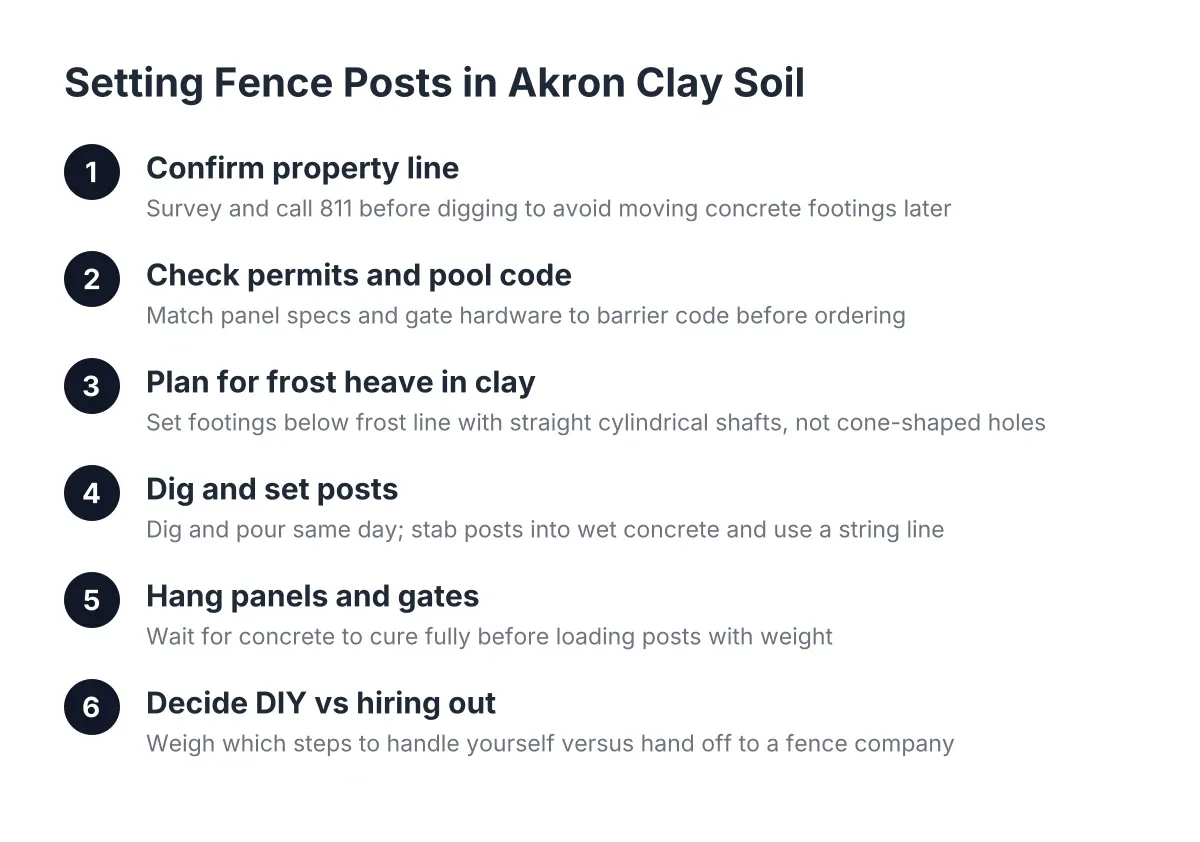
Step 1: Confirm Your Property Line Before Anyone Digs
Locate your property line first, because a rigid metal fence is the worst fence to move later. A wood fence section can be reset in an afternoon. Wrought iron panels are fixed widths, and the posts sit in large concrete footings. If the fence is three inches over the line, fixing it means breaking out concrete.
If your survey pins are missing, or you and the neighbor disagree on where the line runs, get a survey before the fence quote, not after. Akron has a mix of older platted city lots and newer suburban parcels, and the setback norms vary by neighborhood. Ask your fence company directly how they handle line placement. A straight answer sounds like this: the fence goes a set distance inside your line, you keep the survey paperwork, and if a neighbor ever questions it, you have something to point to.
Say a homeowner in Goodyear Heights wants an ornamental fence after a new neighbor starts asking where the old chain link actually sits. In that scenario, spending on a survey before installation is cheaper than a boundary dispute after the concrete cures. Call 811 for utility marking too; it is free and required before digging.
Step 2: Check Permits and Pool Code Requirements
If the fence encloses a pool, hot tub, or spa, check the code requirements before choosing panels. Pool barriers in the Akron and Summit County area generally need to meet minimum height rules, limit the gaps between pickets and under the bottom rail, and include self-closing, self-latching gates. An inspector will measure all of it at final sign-off.
This matters at the ordering stage, not the installation stage. Wrought iron fence parts like panels, pickets, and gate hardware come in fixed dimensions. If the picket spacing or gate latch height is wrong, you cannot shim your way to compliance. Homeowners facing a permit deadline should hand the inspector's checklist to the fence installer before anything is ordered. A good fence company will match panel specs to the barrier code on paper first.
Step 3: Setting Fence Posts in Clay Soil and Frost Heave Prevention
Clay soil moves fence posts through frost heave. Clay holds water instead of draining it. When that water freezes, it expands and grips the concrete footing, lifting it. Each freeze-thaw cycle can ratchet the post up and leave it slightly out of plumb. Over a few Akron winters, a shallow-set post can tilt enough to bind a gate or rack a panel.
Wrought iron shows this damage faster than other materials. Chain link flexes. Wood racks a little and forgives it. Rigid ornamental panels do not; a heaved post telegraphs through the whole run, and welded panels can crack at the connections.
Therefore, the fix is depth and footing shape, not more concrete at the surface:
- Set footings below the local frost line, so the base of the concrete sits in ground that does not freeze.
- Dig straight cylindrical shafts, not cone-shaped holes. A hole wider at the top gives frost a shoulder to push against.
- Keep concrete thickness consistent all the way down, with a generous amount on all sides of the post.
- Avoid mushroom-topped footings that flare at grade; they act like a handle for frost heave.
Depth requirements vary by jurisdiction and site, so confirm the frost line figure with your local building department or your installer rather than guessing from a national chart.
Step 4: Dig and Set Posts for Clay Ground Conditions
Dig each hole as a straight-sided shaft to below the frost depth, then set the post with full concrete contact on every side. In wet clay, this is slower work than it sounds. Clay smears on auger flights, holes hold water, and the sides can slump before the pour. Crews often dig and pour the same day so holes do not sit open and fill with rain.
Two trade habits matter here. First, posts are often set by pushing them into freshly poured wet concrete, which installers call stabbing the post; it gives full contact between concrete and steel. Second, the crew runs a string line across the post tops, because yards and driveways rarely sit level. The string keeps every post at a consistent height above grade so the fence follows the ground uniformly instead of stair-stepping at random.
In addition, stop the concrete a few inches short of ground level. Cap it with topsoil so grass grows flush against the post and the footing stays hidden. That detail separates a clean residential job from one that looks industrial, and it does not weaken the footing as long as the concrete below is deep and full.
If a post ends up sticking above the string line and will not drive down to height, that usually means the hole was not dug deep enough. The honest fix is pulling it and digging deeper, not cutting the post and hoping.
Step 5: Hang Panels and Gates After the Concrete Cures
Let the concrete cure before loading the posts with panels or gates. Rushing this step on clay ground undoes the careful footing work, because a heavy gate can pull a green footing out of plumb before it ever sees a winter.
Gates deserve extra attention on a wrought iron fence in clay soil. The gate post carries constant swinging load, so many installers oversize that footing or reinforce the post. For pool enclosures, test the self-latching hardware repeatedly after hanging; the latch must catch on its own every time, from a gentle push, or the inspector will fail it. Set the gate with enough ground clearance to swing freely in January, when frost can raise the grade slightly, but not so much that it violates the under-fence gap rule for pool barriers.
Step 6: Decide What to Handle Yourself and What to Hire Out
DIY fence posts in clay only if you can dig below frost depth, pour consistent footings, and live with the result for decades. Most Akron homeowners hire this one out, and the reasons are practical, not sales talk:
- Hand-digging deep shafts in wet clay is brutal, and rented augers bind in it.
- Fixed-width ornamental panels leave no room for post-spacing errors.
- Pool-barrier code failures mean reordering parts and rebooking the inspector.
- A mistake near the property line can turn a quiet disagreement into a legal one.
Professional installation of an ornamental or wrought iron fence typically includes layout, utility locates, digging, concrete, panels, and gate hardware. Surveys, old fence removal, and permit fees are often separate line items, so ask. For broad context on fencing budgets, HomeAdvisor data shows homeowners typically spend between $1,743 and $4,431 on a new fence installation, averaging $3,059 nationally; ornamental metal tends to sit at the higher end of any range because of material and labor. Timeline depends on footage, gate count, and how cooperative the ground is; an installer can give you a real window after seeing the site.
When you compare installers, three questions sort them fast. How deep do you set posts here, and why that depth? How do you handle property line placement and documentation? Will your panel and gate specs meet the pool barrier code before ordering? A fair fence estimate answers all three in writing.
If you are in the Akron area and want a straight answer on post depth, property line placement, or pool code compliance for an ornamental fence, reach out to Akron Fence Co for a clear estimate. We will walk the line with you, explain what your clay ground needs, and put the plan on paper before anyone digs.
If you need fence installation, Akron Fence Co can help.
Prefer to talk it through? Call (330) 302-2470 — a quick call is usually the fastest way to get a straight answer for your situation.