
How to Make a Cedar Split Rail Fence Last Through Akron Freeze-Thaw Winters
A cedar split rail fence is one of the few fence styles that gets better looking as it weathers. The catch in Akron is the ground, not the wood. Our clay-heavy soil holds water, freezes, and shoves posts upward a little more each winter. This freeze-thaw cycle affects how cedar split rail fences perform in winter conditions, and addressing cedar split rail freeze-thaw durability starts with how deep you set the posts. If you want a split rail that still stands straight in 15 or 20 years, the work happens below the frost line, not above it.
This guide walks through the process step by step, the way a careful crew would approach it. Whether you plan to tackle part of it yourself or you want to know what a fair fence installation should include before you ask for a fence estimate, the steps are the same.
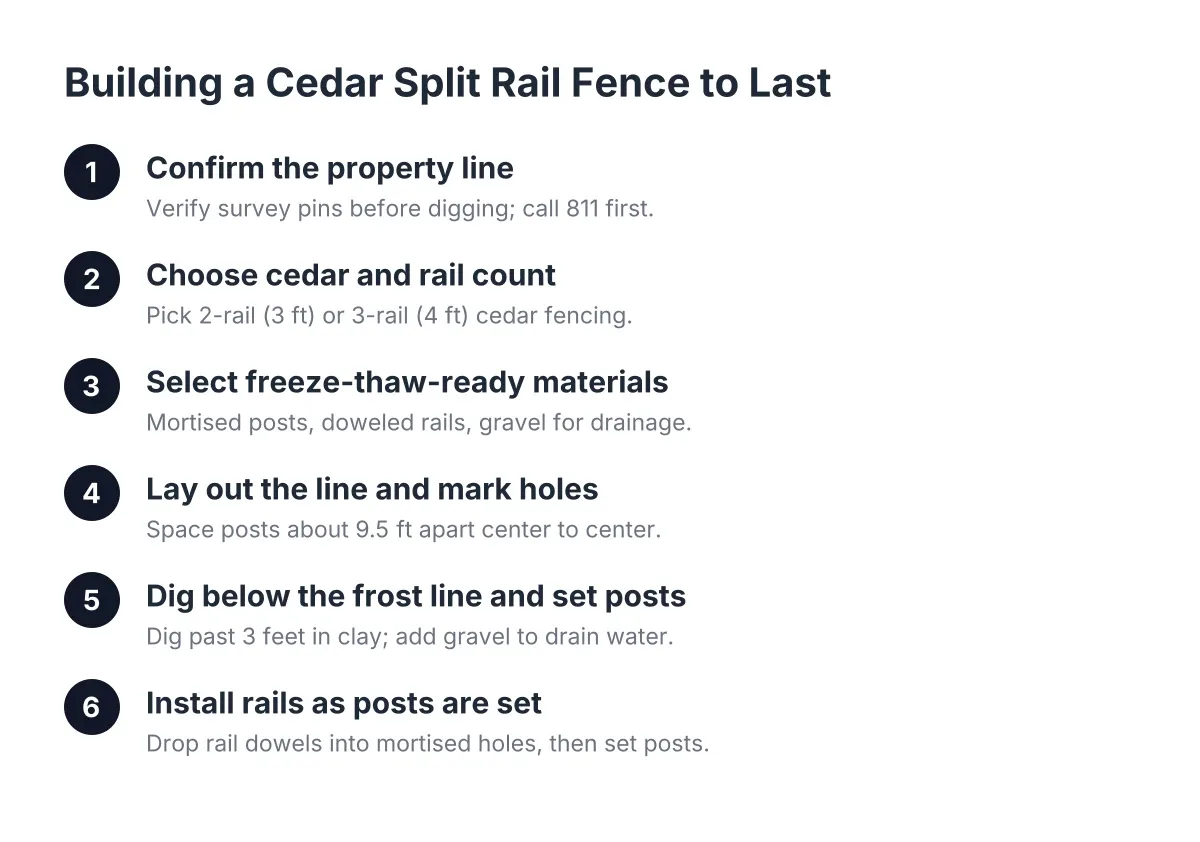
Step 1: Confirm the Property Line Before Anything Else
Start with the line, not the lumber. A split rail fence is often the fence people choose specifically to mark a boundary, so a few inches matter. If your survey markers are missing, or the old fence fell down and nobody agrees who owned it, do not guess based on where the previous fence stood. Old fences in Akron's older platted neighborhoods were sometimes set a foot or more off the true line.
For example, suppose a homeowner near Highland Square inherits a sagging fence when a new neighbor moves in and starts asking questions. The straight path is a current survey, or at least locating the original pins, before a single post goes in. Setting the fence clearly on your own side, even a few inches inside the line, gives you something plain to point to later. A good fence company will tell you up front whether they set posts on the line or inside it, and why.
Also call 811 before digging. Utility locating is free, and post holes go deeper than most people expect.
Step 2: Choose Cedar and Pick Your Rail Count
Cedar earns its reputation here. It resists rot naturally, needs little maintenance, and fades to a soft gray that suits the rustic look most people want from split rail fencing. Pressure-treated pine rails cost less, but they tend to warp and twist as they dry, and the green tint takes years to fade. Red cedar split rail holds its shape and its character.
Next, decide between a 2 rail split rail fence and a 3 rail version:
- 2 rail split rail fence: Lower profile, around 3 feet tall. Good for marking a front yard boundary, framing a driveway, or defining a corner lot without blocking sightlines.
- 3 rail split rail fence: Taller, around 4 feet. Better for backyards, larger lots, and anywhere you want a stronger visual boundary or plan to add wire mesh for a dog.
A 2 rail fence uses less material and costs less per foot. However, if you ever intend to attach welded wire to contain pets, the 3 rail height is usually the better long-term choice.
Step 3: Cedar Split Rail Freeze-Thaw Durability and Material Selection
The posts decide how long the fence lasts, so buy them carefully. Your split rail fence materials list comes down to a few items:
- Cedar split rail fence posts: Line posts drilled with through-holes (mortises), plus end, corner, and gate posts drilled on one or two sides only.
- Rails: Doweled, or paddle-ended, cedar rails, typically 10 to 11 feet long. The dowel ends tuck into the mortised holes in the posts, which is what lets the fence flex instead of pulling apart.
- Gate hardware: Hinges and a latch if your layout includes a gate, plus a built or purchased gate sized to the opening.
- Gravel: For drainage at the bottom of each post hole.
You can find cedar split rail fence posts and rails at big-box and farm stores around Akron, but inspect them before loading. Look for solid heartwood, consistent dowel ends, and rails without deep checks running the full length. Thin, sap-heavy rails are the ones that snap in five years.
Step 4: Lay Out the Fence Line and Mark Post Holes
Stretch a string line between stakes along your confirmed boundary, set a few inches inside your property line. Mark post locations to match your rail length; with 10-foot rails, posts typically land about 9.5 feet apart center to center, because the dowel ends overlap inside each post.
Therefore, measure your actual rails before marking. Split rail is a rustic product, and lengths vary more than dimensional lumber. Dry-fit one post-and-rail section on the ground to confirm spacing, then mark every hole along the string. Plan gate openings now, not after the holes are dug.
Step 5: Dig Below the Frost Line and Set Posts for Cedar Split Rail Freeze-Thaw Protection
This is the step that decides whether your fence survives Akron winters. Clay soil holds moisture against the post, and when that moisture freezes it expands and lifts anything it grips. Shallow posts heave a little each year until the rails pop loose and the line looks like a wave. Deep digging protects cedar split rail from freeze-thaw damage that occurs in frost-prone clay.
Dig each hole deep enough to get below the local frost depth, which in Northeast Ohio generally means well past three feet for a fence post of this height. Put several inches of gravel in the bottom so water drains away from the end grain instead of pooling under it. Standing water at the post base is what rots even cedar over time.
For split rail, many installers set posts in tamped soil and gravel rather than concrete. In clay, that approach has a real advantage: a concrete collar in wet clay can act like a handle for frost to grab. If concrete is used, it should be shaped to shed water, not dished to collect it. Either way, backfill in layers and tamp each one hard. Loose backfill is the most common reason a new fence leans by its second spring.
Step 6: Install the Rails as You Set the Posts
Split rail goes up differently than a panel fence. You set a post, drop the rail dowels into its mortised holes, then set the next post over the far ends of those rails. Work one section at a time down the line. Trying to set all posts first and insert rails later is a fight you will lose, because the holes never line up perfectly with pre-set posts.
Check each post for plumb before tamping, and sight down the line every few sections. Small drifts compound fast over 100 feet. On sloped ground, let the fence step or follow the grade naturally; split rail forgives slope better than almost any other style, which is one reason it suits Akron's older hillside lots.
Step 7: Hang the Gate and Add Wire Mesh if Needed
Set gate posts with extra care, since they carry weight the line posts never do. Deeper setting and a wider hole with well-tamped backfill keep a gate from sagging. Hang the gate with heavy hinges, check the swing, and mount the latch where it closes without lifting.
In addition, if you have a dog, now is the time to staple welded wire mesh to the inside face of the posts and rails. It disappears visually from a short distance and turns a boundary fence into a containment fence without changing the classic look.
How Long Does a Cedar Split Rail Fence Last in Akron?
A well-installed cedar split rail fence commonly lasts 20 years or more in Northeast Ohio, and the rails often outlive the posts. Posts fail first because they sit in wet clay; rails fail from impact or from undersized, sappy stock. Installation depth and drainage matter more to lifespan than any treatment you apply later.
You can stretch that lifespan with small habits. Keep soil and mulch from piling against the posts. Trim vegetation so air moves around the wood. Replace a cracked rail when you see it, since one loose rail stresses the posts on both sides. Cedar needs no stain to survive; if you prefer the warm color over weathered gray, a penetrating stain on all faces slows the fade and sheds water.
One honest trade-off: split rail offers no privacy and modest security. It marks a line and looks good doing it. If your real goal is screening a neighbor's view, a privacy fence in wood or vinyl is the better tool, and it is worth comparing both before you commit.
When to Install It Yourself and When to Call a Fence Company
Split rail is the most DIY-friendly wood fence style, and a fit homeowner can build a short run with a rented auger, patience, and a free weekend. Still, call a pro when any of these apply:
- The property line is disputed, unmarked, or tied to a sale or neighbor disagreement.
- The run is long, the lot slopes, or tree roots and buried utilities complicate digging.
- You are replacing a failed fence and need someone to pull old posts, including concrete footings, from clay.
- You want the post depth and drainage done right the first time, in ground that punishes shortcuts.
Professional cedar split rail fence installation typically includes layout, utility locating coordination, digging, setting posts below frost depth, rails, gates, and haul-away of old fencing. Surveys, permits where required, and wire mesh are often separate line items, so ask. For rough budgeting, HomeAdvisor data shows homeowners typically spend between $1,743 and $4,431 on a new fence installation, averaging $3,059 nationally; split rail often lands toward the lower end because it uses less material per foot than privacy styles. Most residential split rail jobs take a day or two once materials are on site, though ground conditions and length change that.
When you compare quotes, ask two questions: how deep do you set posts in clay, and do you set the fence on the line or inside it. A clear estimate should spell out post depth, material grade, gate hardware, and who handles old fence removal. Vague answers on either question are a reason to keep looking.
If you are in Akron or the surrounding area and weighing a split rail against other fence styles, Akron Fence Co can walk your line, talk through material options, and give you a straightforward fence estimate for your lot and its actual ground conditions. Reach out when you are ready to get posts in before the next freeze.
If you need split rail fence installation, Akron Fence Co can help.
Prefer to talk it through? Call (330) 302-2470 — a quick call is usually the fastest way to get a straight answer for your situation.