
Brown Chain Link Fence vs. Galvanized: How to Pick the Right One
A storm knocks a limb through your fence line, the dog is loose, and now you are staring at options you never planned to research. One of the first choices you will hit is this: a brown chain link fence with a vinyl coating, or plain galvanized steel. Both keep the yard contained. They differ in looks, lifespan, parts, and price, and the right answer depends on your yard, your budget, and how fast you need the fence standing again.
This guide walks through the decision step by step, the same way a fence company would walk it with you at the property line. It also covers what a full chain link install includes, what you can handle yourself, and what Akron's clay soil does to fence posts if the crew gets lazy.
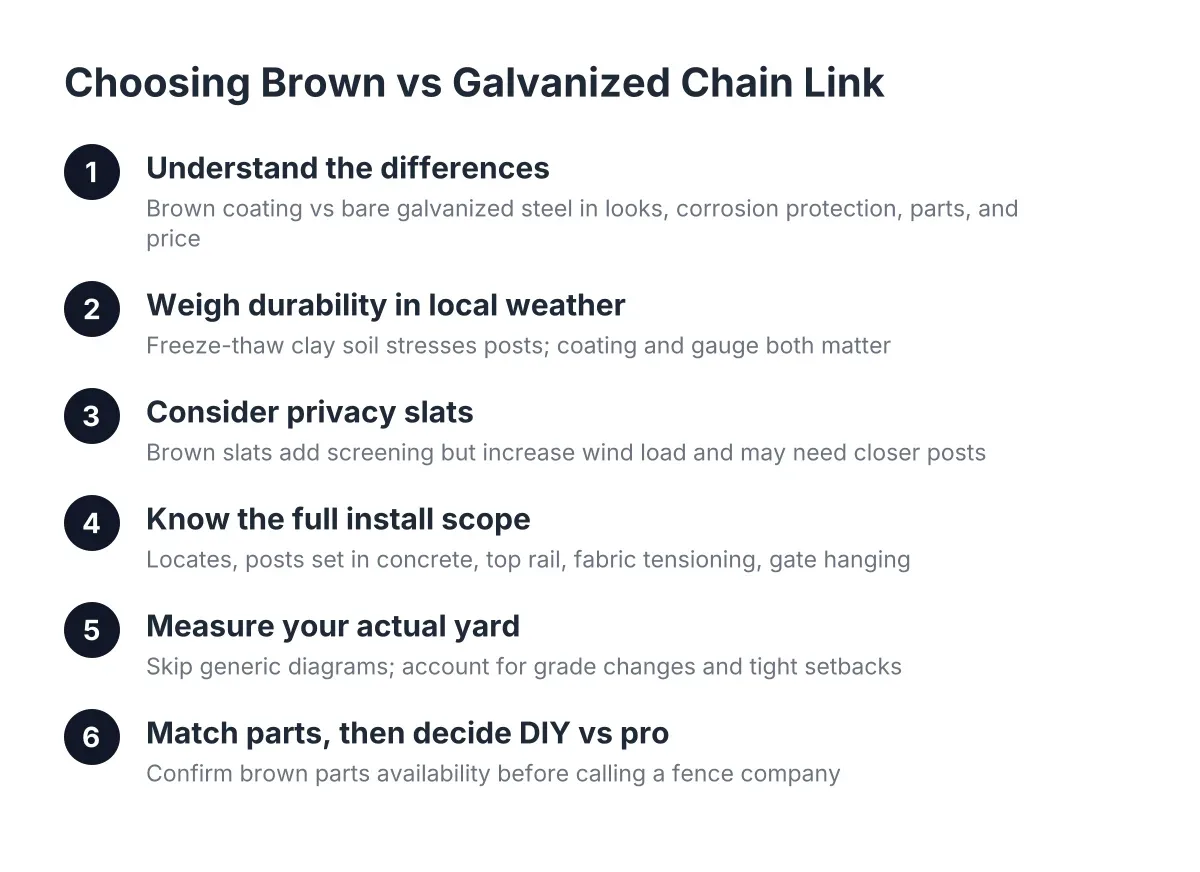
Step 1: Understand What Separates Brown Chain Link From Galvanized
Galvanized chain link is bare steel dipped in zinc. The zinc fights rust, and the fence stays that familiar silver-gray for its whole life. It is the baseline option, the one most people picture when they hear "chain link."
A brown chain link fence starts with the same galvanized steel, then adds a bonded vinyl or polyester coating in brown. The coating covers the mesh, and on a full color system it covers the posts, top rail, and fittings too. Black and green are the other common colors, but brown blends well against wood siding, mulch beds, and tree lines, which is why homeowners near wooded Akron lots often ask for it.
The practical differences come down to four things:
- Looks. Brown recedes into a yard. Galvanized reflects light and stands out.
- Corrosion protection. The vinyl coating adds a second barrier over the zinc, so coated fabric generally outlasts bare galvanized in wet climates.
- Matching parts. Brown chain link fence parts, including posts, top rail, ties, and gate hardware, cost more and are stocked less widely than galvanized.
- Price. Colored chain link fence cost runs higher than galvanized for the same height and gauge, because every component carries the coating.
Step 2: Weigh Durability Against Northeast Ohio Weather
Here is where the comparison gets local. Akron sits on clay-heavy soil that holds water and shifts with freeze-thaw cycles. That movement stresses fence posts more than it stresses the mesh. So the honest durability question is not just "which fabric lasts longer" but "which full system holds up when the ground moves every winter."
Galvanized fabric resists rust well, but the zinc layer wears over decades, and scratches from branches or trimmers expose bare steel. Coated brown fabric keeps moisture off the steel longer. However, a cheap coating can crack in hard freezes, so fabric quality matters as much as color. Ask what gauge the steel is under the coating; a heavier core wire matters more than the finish.
For the framework, a brown-coated post carries the same coating logic. The coating protects the pipe above grade, but below grade, what protects any post is proper depth and a concrete footing shaped to shed water, not the color. A post set shallow in Akron clay will heave no matter what it is coated in.
One more durability note: avoid planning to fix the color later with a can of brown paint. Paint on galvanized mesh chips and flakes within a few seasons. If you want brown, buy it coated from the start.
Step 3: Privacy Slats and Screening Options for Your Brown Chain Link Fence
Chain link, brown or silver, is see-through by design. If your goal is keeping a dog in after storm damage, that is fine. If you also want screening from a neighbor's deck, brown privacy slats slide vertically through the mesh and block most of the sightline.
Brown slats paired with brown mesh read as one solid earth-toned panel from the street. They cost extra per linear foot and add wind load, which means posts may need closer spacing or deeper footings. A good installer will flag that before quoting, not after the fence leans.
Step 4: Know What a Full Chain Link Install Includes
Professional chain link fence installation covers more than unrolling mesh. A complete scope of work usually includes:
- Marking the property line and calling for utility locates before digging.
- Setting terminal posts, corner posts, and line posts in concrete at proper depth for frost.
- Hanging the top rail and tension bands, then stretching the fabric tight with a fence puller.
- Tying the mesh to posts and rail with ties sized to the pipe diameter.
- Hanging and adjusting gates so latches line up and swing clears the grade.
Items that are usually extra: tear-out and haul-away of a damaged fence, clearing brush along the line, privacy slats, and upgraded gate hardware. If you are fencing for a pool, a self-latching, self-closing gate that meets Summit County code is part of the conversation from day one, since inspectors check gate height and latch placement before they sign off a permit.
For context on spend, HomeAdvisor data shows homeowners typically pay between $1,743 and $4,431 for a new fence installation, averaging $3,059 nationally. Chain link tends to land at the lower end of fencing materials; which is less expensive, chain link or wood fence, almost always resolves in chain link's favor for the same length, and brown coating narrows that gap without closing it.
Step 5: Skip the Generic Diagram and Measure Your Actual Yard
A chain link fence installation diagram or a chain link fence installation guide PDF shows ideal conditions: flat ground, square corners, uniform soil. Real Akron yards rarely cooperate. Older platted city lots have tight setbacks and fences butting against neighbors' fences. Newer suburban parcels have grade changes that affect how the top rail steps or follows the slope.
Suppose a homeowner in Kenmore loses 40 feet of galvanized fence to a fallen maple limb. The diagram says replace three posts and restretch. In that scenario, the real job also involves checking whether the surviving posts shifted in the clay, whether the old fabric gauge is still sold, and whether matching fabric to a faded run is even possible. A section repair is often the right call, and a straight-dealing fence company will say so instead of pushing a full replacement. However, if more than a third of the posts are loose or the framework is bent, patching costs more over time than rebuilding the run.
Step 6: Match Brown Chain Link Fence Parts Before You Commit
If you are extending or repairing an existing colored fence, matching matters. Brown coatings vary by manufacturer, and a brown gate from one supplier can sit a shade off from fabric bought at a big-box store. Mesh size and wire gauge must match too, or the splice will be visible and weaker.
Before ordering, confirm these details against what is already standing:
- Mesh opening size, commonly 2 inches or 2 1/4 inches.
- Core wire gauge, with 9 gauge being the heavier residential standard.
- Coating type, since bonded and extruded coatings weather differently.
- Top rail diameter, so new top rail sleeves into the old run.
A local installer who stocks or sources colored systems regularly can usually match closer than piecing it together from retail shelves.
Step 7: Decide What to DIY and When to Call a Fence Company
Homeowners can safely handle small tasks: replacing a bent tension band, re-tying loose mesh, or adding slats to an existing fence. Stretching fabric, setting posts in concrete below frost depth, and hanging gates that stay square are harder than online guides suggest, and a poorly stretched fence sags within a year.
Call a professional now if a storm left mesh down along a road, a pool is exposed without a compliant barrier, or posts snapped at grade. Those are safety problems, not weekend projects. Likewise, if your fence sits on or near a disputed property line, settle the line before anyone digs; that is a surveyor question, not a fencing one.
When you compare installers, ask three things: how deep they set posts for frost in clay soil, whether the quote lists coated or galvanized components line by line, and whether tear-out is included. A fair fence estimate itemizes materials, footage, gates, and removal so you can compare options on the same job, not on vague totals. The cheapest number on paper often becomes the most expensive fence over ten years if the posts heave.
Ready to Compare Options on Your Own Fence Line?
Brown chain link costs more upfront and looks better for longer; galvanized costs less and still does the job. Either way, the fence only lasts if the posts are set right for Akron ground. If a storm took out a section, or a pool permit has you on a deadline, Akron Fence Co can walk your property line, explain the material options in plain terms, and give you a clear estimate for repair or full chain link installation. Reach out to schedule a visit.
If you need chain link fence installation, Akron Fence Co can help.
Prefer to talk it through? Call (330) 302-2470 — a quick call is usually the fastest way to get a straight answer for your situation.