
Why Wood Fences Fail in Akron Clay Soil and How to Prevent Rot
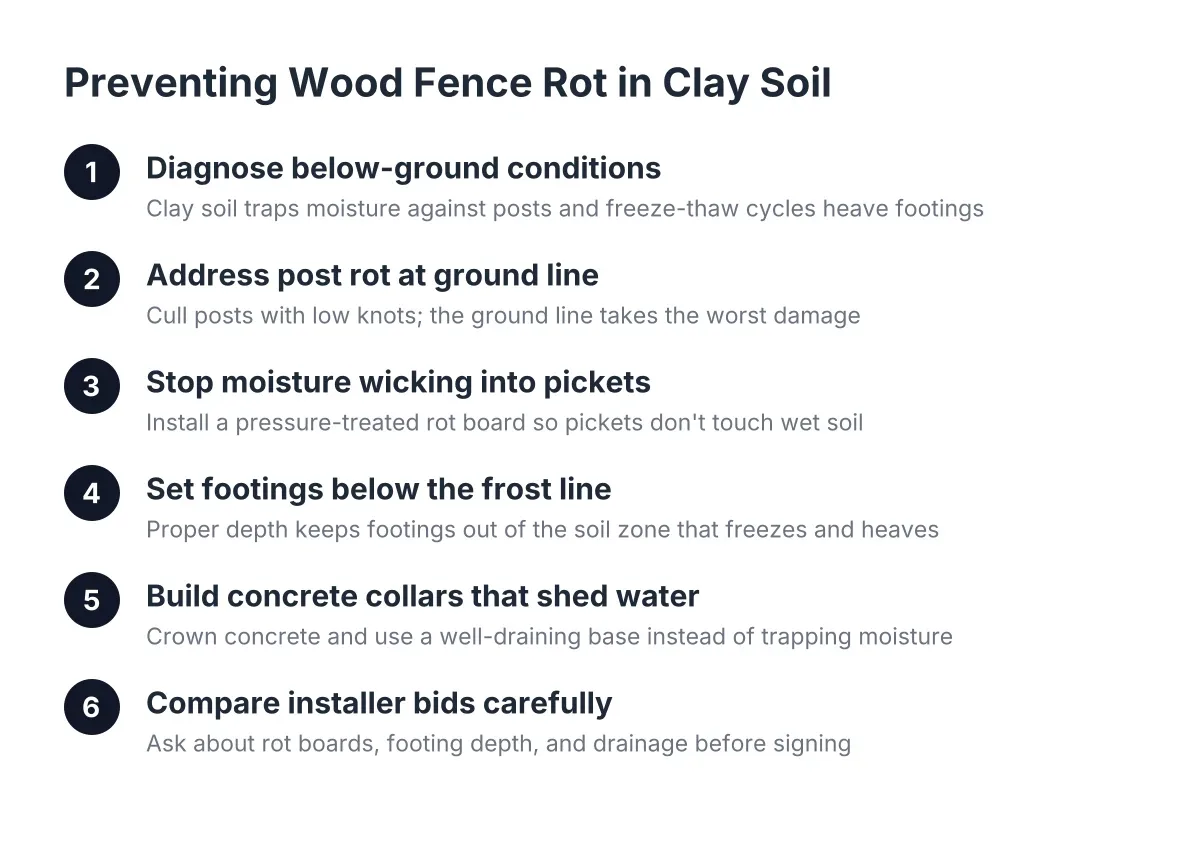
If you are collecting fence quotes right now, here is something worth knowing before you sign anything: most wood fences fail in Akron for the same handful of reasons, and almost none of them have to do with the pickets you can see from the street. The real story happens below ground, where clay-heavy soil holds water against the posts, freeze-thaw cycles push and heave the footings, and moisture works its way up into the wood year after year. Proper wood fence rot prevention—understanding what causes failure below the surface—is the first step to choosing a fence that lasts.
This guide walks through why that happens, what a well-built wood fence does differently, and how to tell a careful installer from a fast one when you are comparing bids. The goal is simple: by the end, you should be able to look at a fence estimate and know which questions to ask before you pick a fence company.
The Problem Starts Below Ground
A wood fence is only as strong as its posts, and the posts live in the worst environment on your property. Above ground, wood dries out after rain. Below ground, it may never fully dry at all.
Akron sits on clay-heavy soil across much of the city and the surrounding suburbs. Clay drains slowly. When rain or snowmelt soaks in around a fence post, the clay holds that water in place instead of letting it drain away. The bottom few feet of the post sit in damp soil for weeks at a time, especially in spring and late fall.
Wet wood rots. That is not a flaw in any particular brand of lumber; it is what wood does when it stays damp. Pressure treatment slows the process, sometimes by many years, but it does not stop it when the post sits in constantly saturated ground.
Then winter makes it worse. Water in the soil freezes and expands, then thaws and contracts. Over many cycles, that movement can push posts upward, tilt them, and open gaps between the post and the soil or concrete around it. Those gaps collect more water, which feeds more rot and more heaving. It is a slow loop, and it is the main reason wood fences fail in Akron faster than the same fence might fail in sandier ground.
How Wood Fences Fail: Rot Causes and Prevention Patterns
Wood fences in Akron tend to fail in three ways: posts rotting at ground level, panels wicking moisture from the bottom up, and footings heaving out of plumb from freeze-thaw cycles. Each failure starts below the surface or at the soil line, which is why a fence can look fine while it is already in trouble. Understanding these patterns is central to wood fence rot prevention.
Post rot at the ground line
This is the big one. The spot where a wood post passes through the soil surface takes the worst of everything. It stays damp from the soil side, gets splashed from above, and goes through every freeze and thaw. Rot almost always starts right there, at or just below ground level.
Here is the frustrating part for homeowners. You can stain or repaint the panels every few years and keep the visible fence looking sharp, and the posts can still rot out underneath. Maintenance on the boards does nothing for the wood buried in wet clay. Many homeowners discover this when a windstorm pushes a section over and the post snaps clean at the dirt line, soft and spongy inside.
Knots make it worse. A knot near ground level is a weak point in the post exactly where the stress is highest. A careful installer culls posts with large knots low on the shaft; a rushed one plants whatever came off the truck.
Moisture wicking into the pickets
Wood pulls water upward like a wick. When the bottom edge of a cedar picket sits near pooled water or wet mulch, it draws that moisture up into the board. The bottom few inches darken, then soften, then split.
The fix is old and simple: a rot board. That is a horizontal pressure-treated board run along the bottom of the fence, under the pickets. The pickets rest on the rot board instead of near the ground. The treated board takes the moisture contact, and when it eventually wears out, you replace one cheap board instead of a whole run of pickets. On a comparison bid, ask whether a rot board is included. Its presence or absence tells you a lot about how the installer thinks.
Footings that heave and tilt
Freeze-thaw movement in clay soil does not just rot posts; it moves them. A footing that is too shallow sits in the zone of soil that freezes every winter. The expanding ground lifts it a little each year. After several winters, the post leans, the gate stops latching, and the panel lines wander.
Depth matters here. Posts need to be set below the frost line so the footing rests in soil that does not freeze and move. Shallow, fast post setting is one of the most common corners cut on cheap fence installation, and it is invisible on day one.
The Concrete Myth That Speeds Up Rot
Many homeowners assume more concrete means a stronger, longer-lasting fence post. The truth is more complicated. Concrete poured tight around a wood post can trap moisture against the wood. Water runs down the post, seeps into the hairline gap between wood and concrete, and sits there. The concrete collar becomes a cup that holds water against the post instead of letting it drain.
That does not mean concrete is wrong. It means how the footing is built matters as much as whether it exists. Good practice includes things like a well-draining base under the post, crowning the concrete at the surface so water sheds away from the wood instead of pooling against it, and setting depth below the frost line. Gravel-set posts can work in some situations because they drain, though they trade away some rigidity.
The point for a comparison shopper is this: when two bids both say "posts set in concrete," they can describe two different jobs. One sheds water away from the post. The other traps it. Ask how the footing is finished at the surface. An installer who can explain it in plain terms probably builds it that way.
What Akron Ground Conditions Mean for Your Fence
Akron is not one kind of yard. Older platted city lots near the center often have tighter setbacks, older surveys, and sometimes decades-old fence lines that may or may not sit on the actual property line. Newer suburban parcels around the edges tend to have cleaner surveys but fresh fill soil that settles for years after construction.
For a new-build perimeter owner, that second point matters. Soil around a recently built home is often disturbed and backfilled, which means it compacts and shifts more in the first several years than established ground does. A post set in loose fill without proper compaction can lean even before rot gets a chance to start. If you closed on a new build and want a full perimeter fence, tell your installer the house is new. Good crews adjust how they set posts in disturbed soil.
Property lines deserve a sentence of their own. Before any fence installation, confirm where your line actually is, especially on older lots where the neighbor's hedge or an old chain link fence may have drifted off the true boundary years ago. Local setback and permit rules vary by municipality, so check with your city or township before posts go in. When a line is unclear or disputed, a professional survey is worth the money; that is a situation where guessing can cost you a rebuilt fence later.
When Wood Fences in Akron Fail Anyway: Repair Choices
Suppose a homeowner in Kenmore has a ten-year-old privacy fence. The panels are solid and the stain is holding, but three posts are rotting at the dirt line and one section leans after every hard wind. The instinct is usually all-or-nothing: rip out every post and footing and start over.
That is not always the most practical path. When a post is rotted at ground level but the concrete footing is sound, one common approach is to cut the post off above the bad section and set a new steel post into the original footing. This costs less than full demolition and solves the leaning problem now. It also buys time; the repair keeps the fence standing while the homeowner budgets for a full replacement later.
Leaving old footings in place is not laziness, either. Established concrete footings along a fence line help stabilize the surrounding soil. Ripping every one of them out of wet clay is expensive, messy work that is not always necessary.
There are limits to repair, though. If most posts are soft, if the rails are sagging, or if the pickets are splitting across long runs, patching sections becomes a treadmill. At that point, a replacement quote and a repair quote side by side will tell you which path makes sense. A fence repair that preserves good footings is a smart interim move; a fence repair on a fence that is failing everywhere is just a slower way to pay for a new fence.
Best Practices for Wood Fence Rot Prevention and Installation
If you are gathering multiple bids, you need a baseline for what "done right" means. Here is what a wood fence built for Akron ground conditions should include:
- Posts set below the frost line, deep enough that the footing sits in soil that does not freeze and heave.
- Footings finished to shed water, crowned or sloped at the surface so rain runs away from the post instead of pooling against it.
- A pressure-treated rot board along the bottom so cedar or pine pickets never wick moisture from the ground.
- Pickets held off the soil, with a consistent gap or rot-board contact rather than boards buried in dirt or mulch.
- Sound posts, culled for large knots near the ground line where stress is highest.
- Gates framed and hinged for movement, since gates take the most abuse and show soil shift first.
- A clear plan for the property line, confirmed before digging, not assumed from an old fence or a hedge.
Material choice feeds into this too. Pressure-treated pine posts resist ground rot better than untreated cedar. Cedar pickets look better and weather well above ground. Redwood resists rot naturally and holds its color, but it is a premium material with a price to match, and its high tannin content needs the right fasteners. Steel posts with wood panels are a hybrid worth asking about, since steel does not rot, warp, or twist the way wood posts do over time; the trade-off is a different look at each post unless the steel is boxed in wood.
Vinyl fence, aluminum fence, and ornamental fence options sidestep rot entirely, which is part of why some Akron homeowners choose them. But a wood fence built with the details above can serve for a long time; wood is not a bad material, it is an unforgiving one when the below-ground work gets rushed.
Cost, Timeline, and What Is Usually Extra
National figures give you a rough anchor for budgeting. Homeowners spend an average of $2,550 on fencing projects according to HomeAdvisor's cost guide, and HomeAdvisor data shows most new fence installations run between $1,743 and $4,431, averaging $3,059 nationally. Redfin reports fence installation costs average around $3,200 in the U.S., varying by material and fence type. A full perimeter fence on a larger lot, in wood, vinyl, or aluminum, can land well above those averages because total footage drives cost more than any other factor.
In 2026, the main cost drivers on a wood fence estimate are linear footage, fence height, material grade, number of gates, and site conditions. Clay soil, slopes, tree roots, and old footing removal all add labor. That is why no honest number posted online will match your yard exactly; a fair fence quote comes after someone measures your lines and looks at your ground.
Timeline depends on footage, weather, and permit timing, so ask each bidder for their expected schedule rather than assuming one. In Northeast Ohio, ground conditions also shape the calendar; frozen ground slows digging, and saturated spring clay can delay post setting.
What is usually included versus extra varies by company, so confirm each of these in writing: old fence tear-out and haul-away, permit handling, utility line marking, gate hardware, staining or sealing, and cleanup. Two bids that look far apart often converge once you line up what each one actually covers.
DIY or Hire a Fence Company?
A capable homeowner can handle some of this work. Staining and sealing panels, replacing a cracked picket, tightening gate hardware, and adding a rot board to an existing fence are all realistic weekend projects.
Post setting is where DIY gets risky in this soil. Digging below the frost line in wet clay, compacting the base, plumbing the post, and finishing the footing to shed water is physical, fussy work, and errors stay hidden until the fence leans. Full installations also raise property line and permit questions that are easier to get right with a local fence company that works in Akron ground every week. Call a professional now if you see posts moving at the base after wind, a gate that no longer latches because the line has shifted, or soft, spongy wood at the dirt line; those are structural warnings, not cosmetic ones.
How to Compare Fence Bids Without Getting Burned
You do not need to become a fencing expert to pick well. You need three questions, asked of every bidder, with the answers in writing:
- How deep do you set posts, and how do you finish the footing at the surface? You want depth below the frost line and a footing that sheds water away from the wood.
- Do you include a rot board, and how do you keep pickets off the ground? This one question separates installers who think about moisture from installers who think about speed.
- How do you confirm the property line before you dig? Listen for a real process, not "we'll follow the old fence."
A fair fence estimate itemizes footage, materials, gates, tear-out, and extras so you can compare bids line by line. A vague one-number quote makes comparison impossible, which is usually the point. The cheapest bid often skips exactly the below-ground details this article covers, and those are the details that decide whether your fence stands straight in ten years or leans in five.
If you are weighing material options for a yard in Akron or the surrounding Northeast Ohio area, Akron Fence Co can walk your lines, talk through wood, vinyl, aluminum, chain link, and ornamental options, and put together a clear estimate built for the ground your fence will actually stand in. Reach out when you are ready to add a local number to your comparison.
If you need fence installation, Akron Fence Co can help.
Prefer to talk it through? Call (330) 302-2470 — a quick call is usually the fastest way to get a straight answer for your situation.