
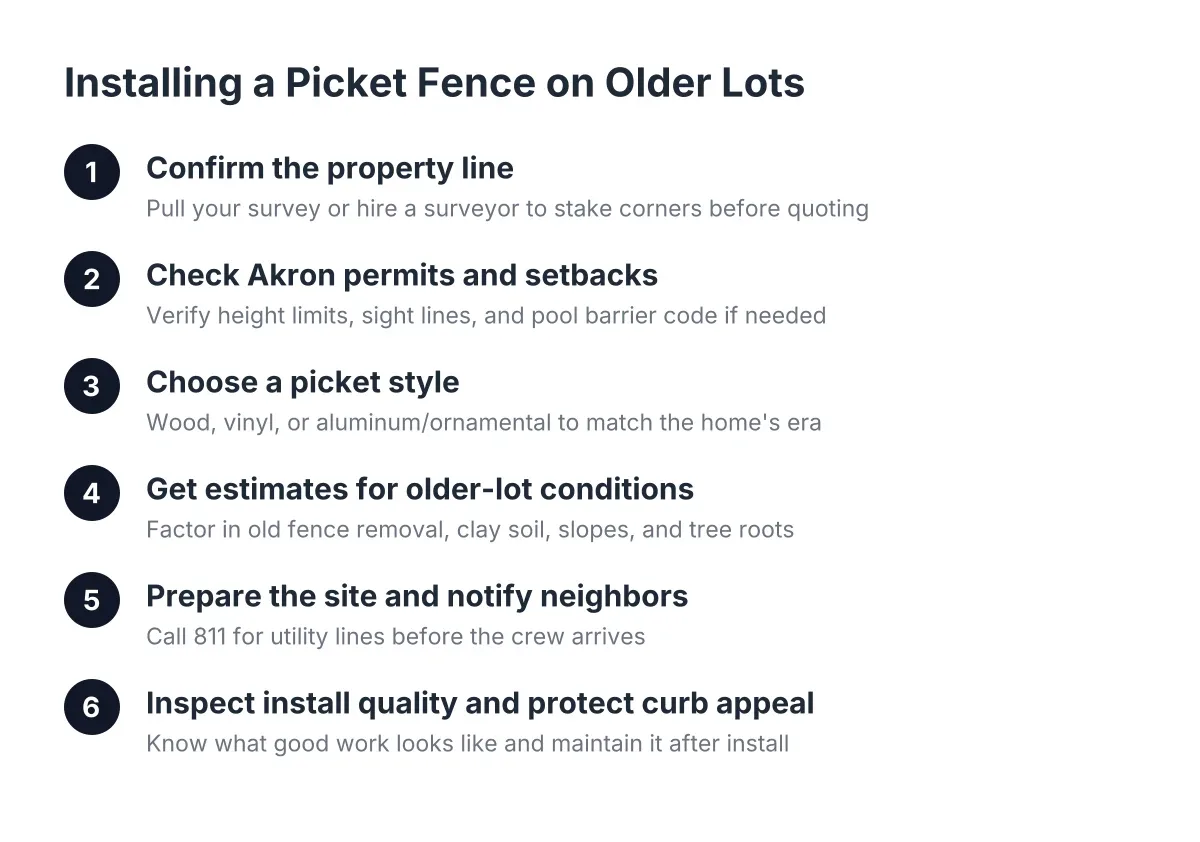
Picket Fence Installation for Older Akron Homes: A Step-by-Step Guide
A picket fence suits an older Akron home the way almost nothing else does. If you own a bungalow or foursquare on one of the city's older platted lots, a picket fence for older homes comes with a few wrinkles newer subdivisions never see: tight setbacks, missing survey pins, uneven grades, and sometimes a neighbor watching every post go in. This guide walks you through the process step by step, so the fence goes up clean, stays on your side of the property line, and adds curb appeal that pays back at resale.
You have already decided on a picket fence. Good choice for an older home. Now the job is getting it installed right the first time.
Step 1: Confirm the Property Line Before Anything Else
On older Akron lots, the property line is the single biggest source of trouble. Many of these parcels were platted a century ago, the original survey pins are long gone, and the old fence that used to mark the boundary may have been in the wrong spot for decades. Do not assume the neighbor's hedge, the old fence posts, or the mowing line is the legal boundary.
First, pull your lot survey if you have one from closing. If you never got one, or the markers are missing, hire a licensed surveyor to stake the corners before any fence quote becomes a contract. Yes, a survey is an added cost. However, it is cheaper than moving a fence three inches, and far cheaper than a boundary dispute with a neighbor.
If you are already in a touchy situation with the neighbor, a staked survey is your paperwork. You can point to the pins and say the fence sits inside your line. That ends most arguments before they start. A good fence contractor will build to the staked line, but the survey itself is the surveyor's job, not the fence crew's, so plan for that step separately.
Step 2: Check Akron Permits, Setbacks, and Code Rules
Fence rules in Akron depend on where the fence sits on the lot and how tall it is. Front-yard fences, which is where most picket fences go on older homes, face lower height limits than backyard privacy fences. Corner lots carry sight-line rules near the intersection. Before you sign anything, confirm what your specific address allows, because older platted lots often have shallower front setbacks than newer parcels.
In addition, if the picket fence will enclose a pool, hot tub, or spa, the rules get stricter. As of 2026, pool barrier requirements in the Akron and Summit County area generally mean a minimum fence height, limited gaps between and under pickets, and a self-closing, self-latching gate. One detail trips up homeowners: with a pool, the smooth side of the fence faces outward, away from the pool, so the rails cannot be used as a ladder. Many people want the finished side facing their own yard and only learn at inspection that this fails the barrier code. If a permit closeout is riding on this fence, tell your installer up front so the layout and gate hardware meet code the first time.
Step 3: Picket Fence Styles for Older Homes
An older Akron home looks best with a fence that matches its era. A 1920s bungalow with a plain vinyl panel out front can look off; the same house behind a dog-eared or gothic-top wood picket fence looks like it was always there. Style is the main curb-appeal decision, so take it seriously.
Here are the main choices for picket fence installation at older homes:
- Wood pickets. The traditional look. Takes paint or stain, so you can match the house trim. Needs maintenance every few years, and Akron's clay-heavy, freeze-thaw soil is hard on untreated posts.
- Vinyl pickets. The low-maintenance route. White vinyl reads as classic from the street and never needs paint. Fewer color options, and repairs mean replacing sections rather than single boards.
- Aluminum or ornamental. Not a true picket style, but a strong pick for pool enclosures on older homes where code compliance and an open view matter more than a cottage look.
Picket spacing and top style matter too. Wider spacing feels open and friendly, which suits a front yard. Tighter spacing holds back a dog and meets pool-barrier gap rules. Custom details like scalloped tops, trim caps, or decorative post caps genuinely cost more, because they take more material and more labor than a plain run. They are not padding on the estimate.
Step 4: Get Estimates That Account for Older-Lot Conditions
Fence pricing is not just boards and posts. It reflects how the fence is built, the style you chose, the hardware, and how long the fence is expected to last. For national context, HomeAdvisor data shows homeowners typically spend between $1,743 and $4,431 on a new fence installation, averaging $3,059. Redfin reports a similar national average of about $3,200, varying by material and fence type. Your number will depend on length, material, gates, and site conditions.
Older Akron lots add their own cost factors. Ask every fence company you talk to how they handle these:
- Old fence removal and haul-away, including concrete footings from the previous fence
- Posts set for clay soil that shifts with freeze-thaw cycles, which affects depth and footing method
- Slopes and uneven grades common on older streets, which may call for stepped or racked sections
- Tree roots, buried debris, and utility lines on lots that have been worked for a hundred years
- Gate count and hardware, especially self-latching hardware if a pool is involved
Be wary of the lowest bid. A cheap fence that heaves out of the clay in a few winters costs more over time than a well-set fence that costs more upfront. Ask each fence contractor what the warranty covers and how deep they set posts for this soil.
Step 5: Prepare the Site and Talk to the Neighbor
Before the crew arrives, call 811 so utility lines get marked. Clear the fence line of planters, stored items, and overgrowth. Confirm where materials and the auger or skid steer will stage, since older lots often have narrow side yards and no alley access.
Next, talk to the neighbor, even if the relationship is strained. Say a homeowner in Highland Square is replacing a leaning fence that both households always assumed sat on the line. Suppose the new survey shows the old fence actually sat four inches onto the neighbor's side. In that scenario, showing the neighbor the survey pins and explaining the new fence will sit fully inside the homeowner's line, before the crew shows up, prevents a confrontation on installation day. A short, calm conversation with the stakes visible in the ground does more peacemaking than any letter.
One honest trade-off: building inside your own line by a few inches means you give up a sliver of usable yard, and you take on the maintenance strip on the far side. Most homeowners accept that trade for a clean, undisputed boundary.
Step 6: Know What Good Installation Looks Like on Install Day
You do not need to hover, but you should know the marks of careful work. Posts should be set to a consistent depth with footings suited to clay soil, not shallow holes with a bag of dry mix dumped in. The fence line should run straight between the surveyed points, with string lines in use.
Watch how the crew handles the spots where full sections do not fit. At corners and run ends, a careful installer measures the leftover gap, cuts a section to size, and places a picket at the corner to hide the cut edge. Cut sections belong in the least visible stretch of the yard; full sections belong where people see them from the street. On sloped ground, experienced crews adjust their building direction section by section so pickets stay tight and even instead of sliding downhill. These small habits are the difference between a fence that looks right from the sidewalk and one that always looks slightly off.
For a pool enclosure, confirm the gate self-closes and self-latches from any open position before the crew leaves, and that picket gaps meet the barrier spec. Fixing it before the inspector visits is easy. Fixing it after a failed inspection delays your permit closeout.
Step 7: Protect the Curb Appeal You Just Paid For
A picket fence boosts the street-facing look of an older home, but only if it stays crisp. For wood, plan to repaint or restain on a regular cycle, and touch up the post bases where moisture collects first. For vinyl, an occasional wash keeps white pickets white. Check gate hinges and latches each spring, since Akron's freeze-thaw cycles work hardware loose.
Keep your survey, permit paperwork, and the installation contract together in one folder. If a future neighbor, realtor, or buyer ever questions the boundary, you can show exactly where the line sits and that the fence was installed inside it. For a homeowner who started this project to settle a property-line question, that folder is the finish line.
Picket Fencing for Older Homes: When to Bring in a Professional
Call in help when the project touches a legal line or a code deadline. Picket fence installation around older homes is a reasonable DIY project on a flat, surveyed lot with no disputes. However, if the boundary is contested, the pins are missing, the grade is rough, or a pool inspection is waiting on the fence, a surveyor and an experienced local installer are worth the cost. They carry the layout, code, and clay-soil knowledge that keeps a front-yard improvement from becoming a backyard fight.
If you need picket fence installation, Akron Fence Co can help.
Prefer to talk it through? Call (330) 302-2470 — a quick call is usually the fastest way to get a straight answer for your situation.